
Culture has a fundamental role in our societies. It facilitates social inclusion, freedom of expression, identity-building and civil empowerment, while strengthening economic growth and helping to foster political participation and ownership.
Culture and creative industries (CCIs) are also one of the most powerful engines of development worldwide. CCIs account for more than 48 million jobs globally – almost half of which are held by women. Furthermore, CCIs are particularly attractive to youth. They employ more young people than any other sector.
The role of culture as an enabler and driver of sustainable development was acknowledged by the international community at MONDIACULT 2022 convened by UNESCO, the largest world conference devoted to culture. For the first time, culture was recognized as a “global public good”. States made a strong call for culture to be included “as a specific objective in its own right” among the next United Nations Sustainable Development Goals.
The EU is therefore committed to supporting and promoting culture as an essential contribution to human rights and a key element of good governance, inclusion and sustainable growth.
Our approach
Culture has an important place in the EU’s development cooperation. Our action is guided by the EU Strategy for International Cultural Relations, which identifies three main axes:
- supporting culture as an engine for sustainable social and economic development
- promoting culture and intercultural dialogue for peaceful inter-community relations
- reinforcing cooperation on cultural heritage
The New European Consensus on Development, the New Agenda for Culture, the European Framework of Action on Cultural Heritage, and the EU Council Resolution on the Cultural Dimension of Sustainable Development develop this approach further.
Our approach to culture in international partnerships reflects the EU Global Gateway strategy, which aims to promote sustainable and trusted connections among peoples. Building people-to-people relations within and between countries and continents is crucial to create longstanding partnerships based on shared values. Cultural relations play an important role in that process.
Furthermore, our actions advance the 'Team Europe' approach, which means joining forces between the EU and EU Member States by pooling our resources and expertise to deliver more effectively and with greater impact. For this purpose, we collaborate with the network of European Union National Institutes for Culture (EUNIC).
Acknowledging the important role of young people in development cooperation, culture is also firmly embedded in the Youth Action Plan, the first ever policy framework for EU’s strategic partnership with young people around the world.
Our support
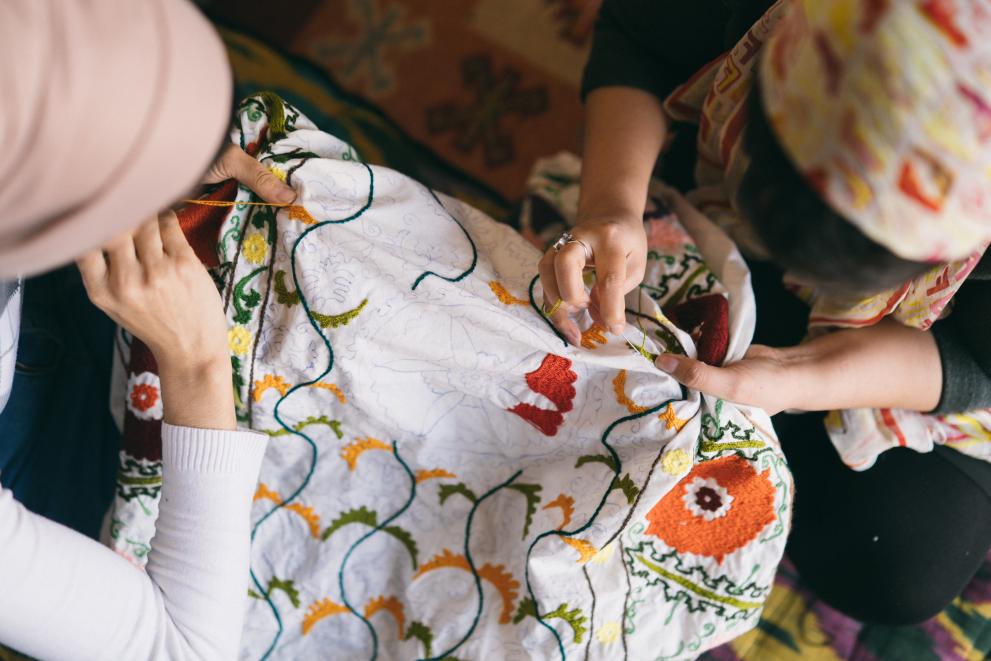
The EU funds projects in partner countries ranging from promoting and protecting cultural heritage and identity building, strengthening cultural and creative industries (CCIs), to promoting peacebuilding, conflict prevention and reconciliation through inter-cultural and inter-religious dialogue.
The EU is also working on strengthening the resilience of the cultural sector, particularly in the wake of the global COVID-19 crisis, which has exacerbated structural fragilities and inequalities. These include social and gender gaps, unequal access to culture, as well as restrictions on fundamental freedoms, notably artistic freedom, and the status and livelihoods of cultural professionals.
Our partner countries benefit from various instruments of support ranging from EU country support, regional programmes and global initiatives.
Support to culture, CCIs and cultural heritage is integrated in the instruments supporting main EU priorities, such as the Green Deal, support to job creation and growth, democracy, governance, youth, human rights, etc.
The EU supports culture in all geographic regions, with a particular attention to Sub-Saharan Africa and the role that culture plays in the EU-Africa partnership. The EU supports the culture sector in 25 countries in Sub-Saharan Africa, and regional programmes are in preparation to strengthen the EU-Africa and intra-Africa cultural cooperation. Actions will aim to promote intercultural dialogue and cultural diversity across the continent. They will also aim to protect and promote cultural heritage as a vector for social cohesion, stability, cultural tourism, employment and sustainable growth.
At global level, the EU signed the UNESCO convention on cultural expression and supports progress on this agreement’s objectives.
Our flagship initiatives
Examples of our flagship initiatives:
ACP-EU Culture: Towards a Viable Cultural Industry
- The programme enhances the quality and the presence of artists and artworks from African, Caribbean, and Pacific countries in international markets and contributes to job creation and revenue generation, in particular for youth.
- UNESCO 2005 Convention on the Protection and Promotion of the Diversity of Cultural Expressions.
- The Cultural and Creative Industries Financing Initiative (CreatiFI) facilitates investments in cultural enterprises from Africa and the Caribbean. It assists financial intermediaries and banks in the provision of loans and equities to cultural entrepreneurs.
- The Facility provides partner countries with on-demand technical assistance and peer-to-peer support on policy design, implementation and advocacy, in order to support the implementation of the UNESCO convention on cultural expressions.
- The programme aims to deepen integration between Cuba and the different linguistic areas of the Caribbean region and to strengthen people-to-people cultural cooperation both within the region and with the EU. It includes professionalization of the cultural heritage and creative industries sectors and opening-up of new opportunities for socio-economic development and cultural cooperation.
The Innovative Financing Initiative for Culture (IFIC)
- This pilot action provides access to finance, training and supporting services to micro, small and medium cultural enterprises. It is open to cultural entrepreneurs, especially youth and women, in East Africa and in Burkina Faso.
ProCultura - Employment promotion in income generating activities in the cultural sector
The programme promotes employment and income generation in music, performing arts, and children/youth literature and publishing in Lusophone Africa (PALOP countries) and Timor Leste.